In our introductory blog post of this series we discussed pond owners being extremely hesitant to administer pond algae treatments. This is probably the number one reason pond owners do not treat their pond algae; they are worried about pond algae treatments killing their fish. We would be lying if we said there weren’t risks involved, however, we are confident that you can successfully treat for pond algae and keep your fish safe. The purpose of this blog post is to give pond owners the confidence to treat their pond algae while still respecting the risks involved.
Let’s start with what type of pond our pond algaecides are meant to be used on. Our products are specifically meant for bodies of water that are measured in acres, not small decorative ponds. There are a couple of species of fish that are extremely sensitive to copper sulfate, which is the active ingredient in many pond algaecides. Koi, Goldfish, and Trout are extremely sensitive to copper sulfate. Ponds with these types of fish should not be treated with copper based products. The type of pond that usually contain these types of fish are small decorative ponds that are measured in gallons not acres. Trout are the exception… to this rule, but are not typically found in a large privately owned pond because they require cool, oxygen rich, and clean water. Many ponds don’t have the water quality to support Trout.
Pond algae labels can be intimidating at first glance. Algaecide labels are mandated by the EPA and can be difficult to read and interpret. These products are concentrates; in their concentrated form they can be dangerous if left on skin, ingested, inhaled, or gotten in eyes just like any other concentrated product in the market. However, once applied to your pond in the proper dosage and in the right way there are no restrictions for swimming, fishing, irrigation, or even livestock consumption!
There are some basic rules of thumb when it comes to treating your pond. These rules apply to pond treatment when you are killing a growth not applying pond dye or pond bacteria.
- Always treat ½ of your pond at a time
- Wait approximately 10 days between treatments
- Spraying is the most effective application method
By following these 3 simple rules you will keep your fish safe and get the most out of your pond algae treatment. I encourage you to check out the blog post about Fish Kill. Knowing the some common misconceptions about pond products and fish kill may change your perspective.
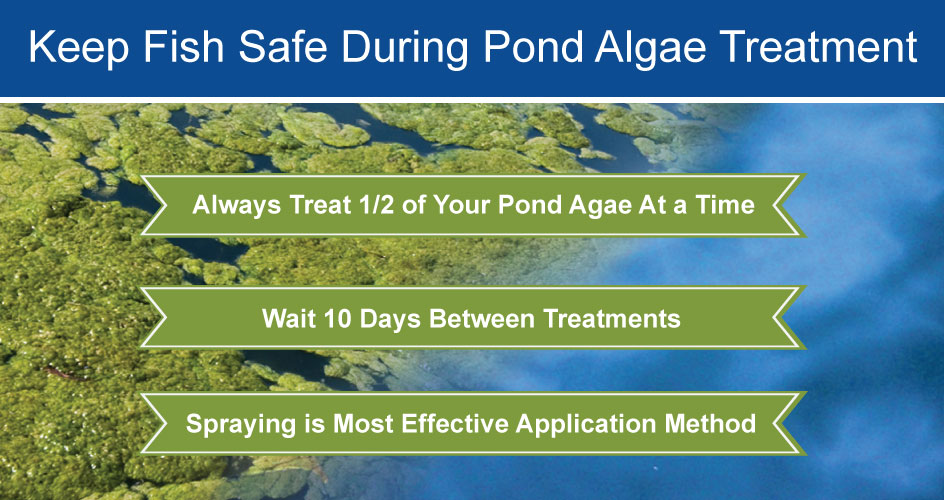
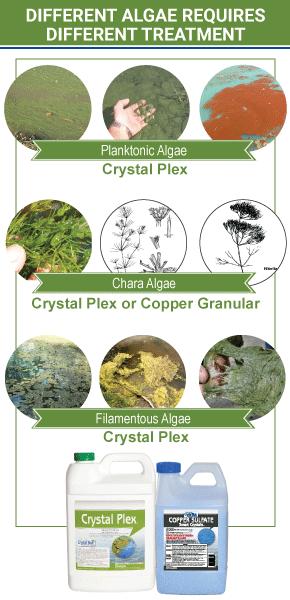
Here is what application will look like when following the 3 rules listed above. Crystal Plex is a liquid algaecide that kills a broader variety of algae. For a 1 acre pond with an average depth of 4-6 feet mix a gallon of Crystal Plex with 3-4 gallons of water (the water is just to help you spread the product) and spray ½ of your pond. Wait 10 days and do the same application to the other side. Copper Sulfate is a granular algaecide. We recommend diluting copper sulfate in hot water and spraying. For a 1 acre pond, use 3lbs mixed with 3-4 gallons of water and spray ½ of the pond. Wait 10 days and do the same application to the other side.
If you are still uneasy about pond algae treatment, contact us.
Next Monday we will release Part 4 of our Pond Algae Treatment Series: Why Is My Pond Algae Worse Than My Neighbors?
Part 1: Different Algae Require Different Pond Algae Treatment
Part 2: When Do I Start Pond Algae Treatment?
Part 3: Will Pond Algae Treatment Hurt My Fish? (Current Blog Post)